
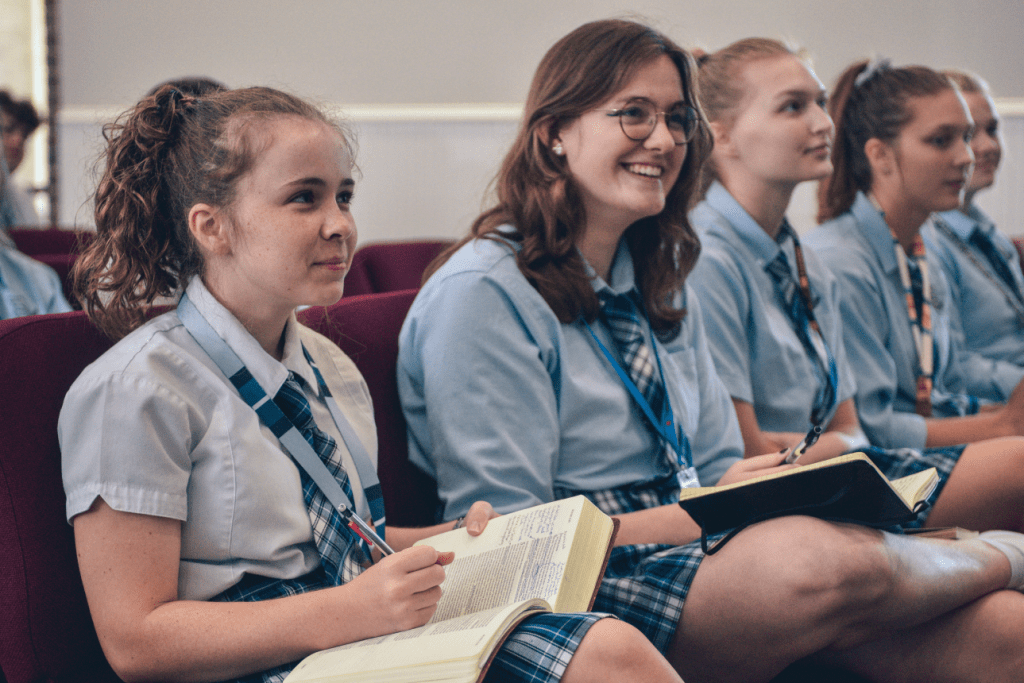
Gratitude from the Head of School
Each fall, my husband, Sam, spends a week or two at our family farm helping my father and brother-in-law with the harvest. What began early in our marriage has become a meaningful tradition and a special way for him to serve and connect with my family. He enjoys the change of pace from his usual work and has even learned to graciously endure my mom’s self-proclaimed “low-effort” cooking. I like to tease that he is still a boy at heart, only now his sandbox spans thousands of acres and his toy trucks are real farm machinery that require skill to operate.
The combine has tremendous technology where every ounce of the harvest is tracked and mapped, showing the field’s yields in vivid color – green for abundance and red where the soil likely lacked the proper nutrients. As a young girl, I learned the significance of those yields. Even now, decades later, my first question when I call home during harvest is, “How are the yields?”
I tend to focus on yields, on numbers, metrics, and tangible results. It is part of who I am: analytical, achievement-oriented, and always striving to drive improvement in our school. We live in a world that prizes measurable outcomes – KPIs, ROI, and data that demonstrate results. It is easy to carry this mindset into education, where student success is tracked through GPAs, test scores, and accomplishments like leading a team to victory on the field or performing a challenging piece in the school concert. We must measure what matters and use data thoughtfully to guide continuous improvement, pursue excellence, and foster a growth mindset. Yet, we must also be careful not to reduce young people to their achievements. The world already does this too often, but in Christian education, we have the opportunity to value students for who they are, not merely how they perform. While metrics have their place, they must never overshadow the more profound, less quantifiable ways students grow, learn, and thrive.
As Thanksgiving approaches, my heart turns toward a different kind of yield, the fruit that springs from the Lord’s faithfulness. I am deeply thankful for the gift of classical Christian education and for what I witness daily at Covenant Christian Academy. Our teachers love the Lord and pour that love into their students, shaping not only their minds but also their hearts and souls. I see families linking arms, walking together through both the joys and challenges of living in community together, writing a shared story- a living testimony to God’s goodness and grace.
Of course, raising and educating young people today is not without challenges. The noise of culture and the relentless pace of life can easily weary even the faithful. In a postmodern world that questions absolute truth and elevates personal opinion above divine revelation, guiding young hearts can feel especially complex. Yet Christian education offers the freedom to help students think deeply, act wisely, and grow in virtue. Truth is not invented by us; it is revealed by God. Real hope is found in Christ, who orders all things for His glory. Here, young minds and hearts are nurtured to flourish, grounded in Scripture, wisdom, and steadfast hope.
Gratitude in this work is not automatic; it is a spiritual practice. It requires noticing God’s presence in the ordinary rhythms of school life, a thoughtful classroom discussion, a student’s insightful question, a teacher’s quiet encouragement, or a chapel worship song sung with sincerity. Gratitude opens our eyes to God’s grace at work, reminding us that every lesson learned, every challenge faced, and every moment of growth is a gift entrusted to our care. In many ways, these are the yields that truly matter, the fruit of faithfulness, care, and intentionality, which no machine or metric could ever fully capture.
Modern research confirms what Scripture has long taught: gratitude transforms the mind. Those who practice it regularly experience greater peace, stronger relationships, and less anxiety. In a sense, science is only now glimpsing what Paul described as “the peace of God guarding your hearts and minds.” Gratitude strengthens what worry tries to steal.
Yet the Bible reminds us that gratitude goes far beyond; it shapes our trust. In Romans 1, Paul explains that humanity’s drift from God began not with idolatry but with ingratitude, “For although they knew God, they neither glorified Him as God nor gave thanks to Him.” Thankfulness keeps our vision clear, helping us recognize every good thing as a gift from God. Dietrich Bonhoeffer, writing from a Nazi prison cell, said, “It is only with gratitude that life becomes rich.” Even in suffering, he found joy that no captor could take away, anchored in the goodness of God.
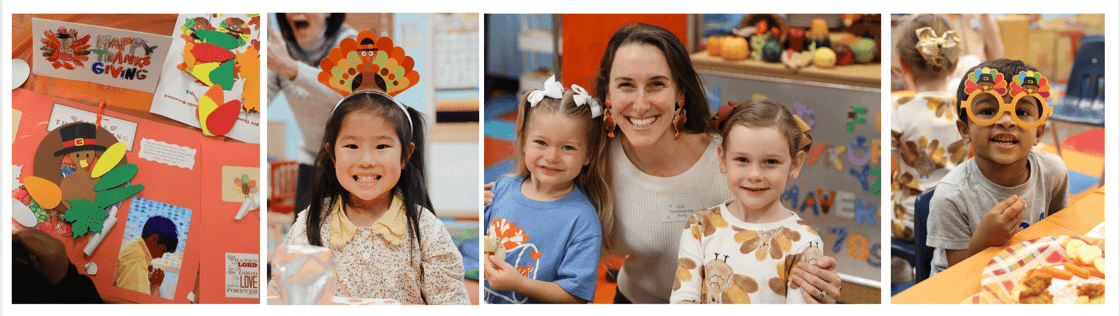
Classical Christian education, at its heart, is not merely the transmission of knowledge but the formation of the soul. I am profoundly grateful for teachers who join in God’s work of transformation, cultivating wisdom, virtue, and faith, and for families who partner in this sacred calling.Together, we are shaping minds that think well, hearts that love rightly, and souls that worship faithfully. Above all, I am thankful for God’s faithfulness; He uses our imperfect efforts to accomplish His perfect purposes.
As I reflect this Thanksgiving season, I am reminded that, like the fields at harvest, the yields that matter most are not always immediately visible. The growth we see in our students, their hearts oriented toward Christ, their minds developing wisdom, and their character strengthened through faithful guidance, is the true harvest. As Galatians 6:9 reminds us, “Let us not grow weary of doing good, for in due season we will reap, if we do not give up.” May our joy, hope, and gratitude remain rooted in God’s steadfast love, the love that placed Jesus on the cross and through which He redeemed us for His glory.
To learn more about our school,
extracurricular activities, and community, download a Parent Info Packet, or take the next step and schedule a visit today!